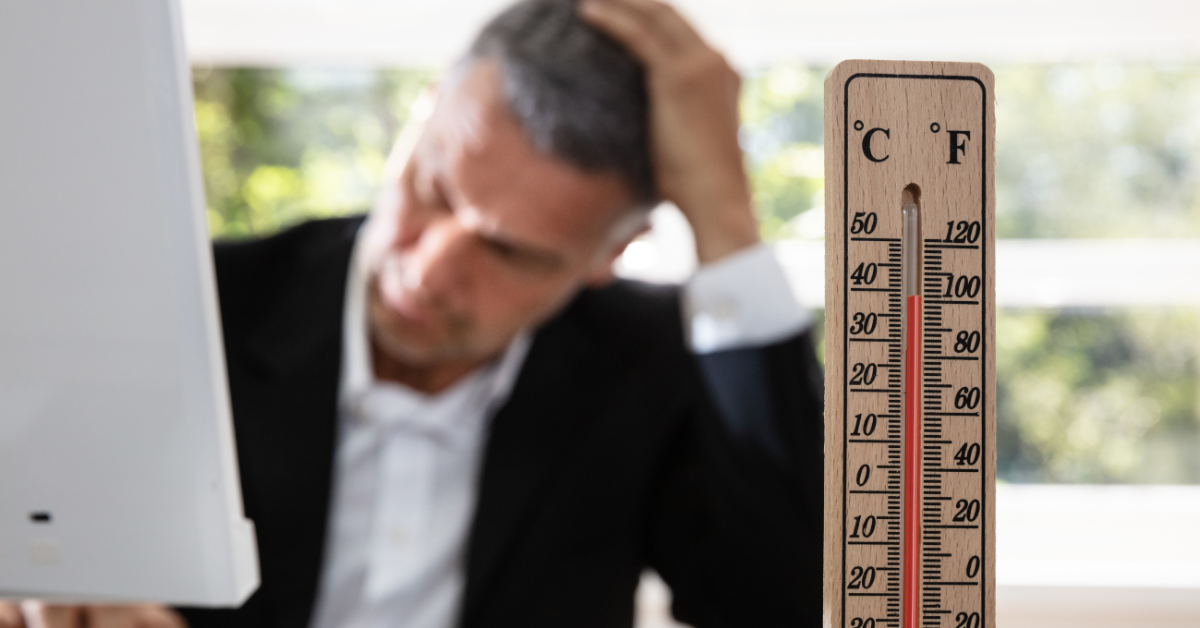
There's no denying that we're getting hotter summers. And higher-temperature working environments can lead to some serious health risks. Whether someone works outdoors, in a warehouse, commercial kitchen, construction site… heat can quickly affect our concentration, wellbeing and physical performance.
Knowing how to spot the signs of heat stress is vital because it can help employers and workers take action before a minor problem becomes a medical emergency.
What is heat stress?
Heat stress happens when the body struggles to maintain a safe internal temperature. This can be because of high air temperatures, humidity, physical exertion, restrictive clothing or PPE.
When the body can't cool itself down effectively through sweating and blood circulation that's when heat-related illness can quickly develop.
The Health and Safety Executive (HSE) warns that heat stress can lead to dehydration and heat exhaustion. In severe cases it can even cause heatstroke.
Early warning signs
The ability to spot the signs of heat stress early is critically important because symptoms often develop gradually and may be mistaken for tiredness or general discomfort. Make sure your team are well award of the signs - you could plan a Toolbox Talk to go through what to look for.
Common early symptoms include:
- Difficulty concentrating
- Excessive thirst
- Heavy sweating
- Muscle cramps
- Heat rash
- Fatigue
- Dizziness
- Headaches
People experiencing these symptoms should move to a cooler area, then they can rest and rehydrate as soon as possible.
When heat exhaustion develops
If heat stress continues, it can progress to heat exhaustion.
Typical symptoms of this include:
- Nausea
- Weakness
- Pale, clammy skin
- Increased heart rate
- Severe tiredness
- Dizziness or fainting
- High temperature
At this stage, rapid action is essential. The affected person should be cooled down, encouraged to drink fluids and monitored closely.
Many incidents can be de-escalated quickly if they're recognised early. That's why employers should train teams to spot the signs of heat stress before things go downhill.
Recognising a medical emergency
Heatstroke is a medical emergency and requires immediate attention.
Warning signs of heatstroke include:
- Confusion
- Loss of coordination
- Seizures
- Loss of consciousness
- Hot skin
- Rapid breathing
- Very high body temperature
If someone is showing signs of heatstroke, call 999 immediately and begin cooling measures while waiting for emergency services.
To help someone suffering from heat stress, move them somewhere cool, offer water, loosen or remove excess clothing, and use cool water, cold packs or fans to reduce their body temperature.
Preventing heat stress in the workplace
Prevention is always better than treatment. Employers can reduce risk by:
- Providing drinking water
- Encouraging regular hydration
- Scheduling demanding tasks during cooler periods
- Allowing more frequent breaks
- Improving ventilation
- Monitoring vulnerable workers
- Delivering heat awareness training
As temperatures rise during summer, organisations should review risk assessments and make sure staff understand what to look for.
A simple message that saves lives
The ability to spot the signs of heat stress can prevent serious illness and protect your staff from harm. While many cases begin with relatively mild symptoms, conditions can worsen quickly in hot environments.
With effective training, sensible control measures and a clear understanding of the warning signs, businesses can create safer workplaces and ensure staff remain healthy, productive and protected throughout the year. You can find more resources for keeping your team safe in our blog - click here.